Data Dwell Blog
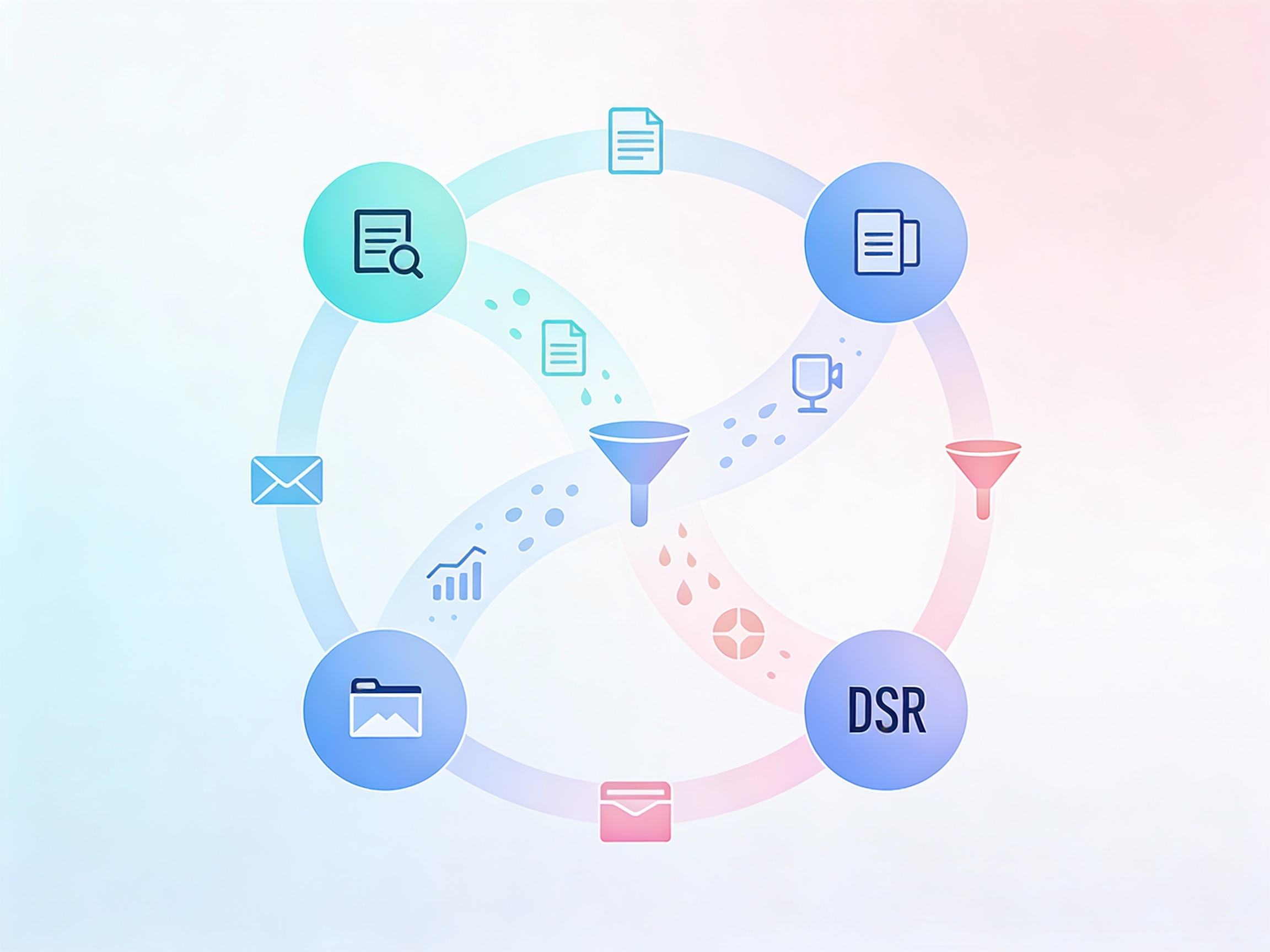
How Digital Asset Management and Digital Sales Room Work in Harmony
Most companies experience the same frustrating dance: marketing spends weeks perfecting assets, organizing them in a digital asset management system, and setting up brand guidelines. Sales, meanwhile, scrambles to find those assets, exports them, customizes them (sometimes inconsistently), and manually sends them to prospects. By the time a prospect gets materials, they're outdated, improperly branded, or-worse-the sales rep couldn't find what they needed and recreated it from scratch.
This disconnect doesn't just waste time. It fractures your brand, slows down deals, and creates blind spots where you don't know what's actually being shared to prospects.
What if you didn't have to choose between a powerful DAM and an effective sales tool? What if both lived in the same platform, working in perfect harmony?
The Friction Most Teams Face
The problem starts with good intentions. Marketing maintains their assets in a Digital Asset Management system to be the single source of truth-organized, versioned, compliant, audited. Sales, meanwhile, needs speed and flexibility. They need to customize materials for specific prospects, bundle assets into compelling packages, and move deals forward without waiting for marketing's approval on every little thing.
When DAM and sales tools live in different systems, this creates real pain:
Marketing's frustration: Sales teams ignore the carefully organized DAM. They ask for files repeatedly. They use outdated versions. They don't follow brand guidelines. Marketing loses visibility into what's being shared and can't update materials in real-time.
Sales' frustration: The DAM is great for marketing, but it's not built for their workflow. Exporting assets, organizing them for prospects, tracking engagement-it all requires jumping between systems. Simple tasks take longer than they should. When marketing updates an asset, sales often doesn't know, and keeps sharing the old version.
Prospect's experience: They receive materials from sales, but there's inconsistency. Sometimes the branding feels off. Sometimes specs are outdated. Sometimes the materials don't feel cohesive. It subtly undermines confidence in your company.
Leadership's problem: There's no clear visibility into what's being shared, to whom, or how prospects are engaging. Compliance teams worry about rogue materials. Revenue teams can't correlate which assets actually influenced a deal close.
This friction isn't just annoying-it's costing you time, money, and deals.
One Platform, Two Powers
Data Dwell's unified approach eliminates this entirely. You get a powerful Digital Asset Management system and a built-in Digital Sales Room-both in the same platform, sharing the same assets, speaking the same language.
Here's what that actually means:
For Marketing: Your DAM remains your control center. You organize assets with rich metadata, set up version control, enforce brand guidelines, and manage approvals. Everything is exactly as organized and compliant as it needs to be. But now, instead of hoping sales will find what they need, you know they will-because the sales room is built right there, pulling directly from your approved assets.
For Sales: You have a modern, intuitive tool to build Digital Sales Rooms for prospects without ever leaving the platform. No exporting. No uploading to a separate system. No recreating materials. You navigate the DAM, pull approved assets, arrange them into customized experiences for each prospect, and share them instantly.
Real-time Synchronization: When marketing updates an asset in the DAM, that change ripples instantly to every Digital Sales Room where it's being used. Outdated materials automatically reflect the newest version. Your sales team never accidentally shares an old product sheet or pricing deck again.
Seamless Handoff: There's no handoff at all. It's not marketing creating and sales consuming. It's marketing enabling and sales executing-all within the same environment.
The Harmony in Action: A Real Workflow
Let's walk through what this looks like in practice.
Your product marketing team creates a new case study-a beautiful PDF showing how a customer similar to your prospect achieved real results. They upload it to Data Dwell's DAM, tag it with relevant metadata (industry, solution, customer size), and set the version as "approved."
Three days later, your sales rep is working a high-value deal. The prospect is a mid-market SaaS company, and the case study would be perfect social proof. The rep opens Data Dwell's Digital Sales Room feature, searches for relevant assets using the same metadata, and finds the case study in seconds. They drag it into the prospect's Digital Sales Room, arrange it alongside product specs and a pricing proposal, customize the title if needed, and share the link.
The prospect views the materials, engages with them, and the rep sees exactly what pages were viewed and for how long. Valuable intelligence for the next conversation.
Meanwhile, two weeks later, marketing finds a typo in that case study. They fix it in the DAM and re-publish. Instantly, the corrected version appears in the prospect's Digital Sales Room. The sales rep doesn't have to do anything. The prospect's next visit shows the improved version. Brand consistency maintained. No errors propagated.
But here's where it gets even more powerful. What if marketing discovers something more serious? A pricing error in a deck that's been shared to five different prospects. Or a product feature claim that needs legal review before it goes any further. With Data Dwell, marketing can withdraw that asset immediately from the DAM. Every Digital Sales Room where it was shared automatically reflects that withdrawal. Sales reps see instantly that the asset is no longer available. No more accidental sharing of problematic materials. No scrambling to contact prospects asking them to delete files. No compliance risk lingering in inboxes.
If the asset is fixed, marketing republishes it, and it automatically reappears-updated-in every sales room where it's being used. Crisis averted. Control maintained. Transparency preserved.
This is harmony. No duplicates. No outdated versions. No manual updates. No system-jumping. One platform. Two powerful tools working together.
The Real Business Wins
This unified approach delivers tangible benefits across your organization:
Faster Sales Cycles: Sales teams move at velocity. They don't wait for marketing to send files or compile materials. They build and share in minutes, not hours. This speed compounds-especially in competitive deals where every moment matters.
Uncompromising Brand Integrity: Every asset shared is the approved version, following your brand guidelines. Sales maintains the flexibility they need while marketing maintains the control they need. It's not a compromise-it's alignment.
Complete Accountability: You have a full audit trail. Which assets were shared? To which prospects? When? How long did they engage? This visibility helps you understand what actually moves deals and helps compliance teams ensure nothing's going rogue.
Marketing Control & Risk Management: If an asset needs to be withdrawn-due to an error, compliance issue, or outdated information-marketing can instantly remove it from the DAM. It automatically disappears from every Digital Sales Room where it's been shared. No more chasing down old files in prospect inboxes. No more risk of problematic content circulating. If the asset is fixed, it reappears automatically-updated-across all sales rooms. Marketing maintains complete control without ever becoming a bottleneck.
Less Overhead, More Output: Marketing doesn't spend time re-sending files or chasing down where outdated materials went. Sales doesn't waste time hunting for assets or jumping between systems. Both teams focus on what they do best: marketing on creating great content, sales on moving deals.
Better Cross-Team Collaboration: When marketing and sales tools are separate, it's easy to blame the other team for problems. When they share a platform, there's natural collaboration. Sales gives feedback on what assets actually work. Marketing sees how their content drives engagement. It creates a virtuous cycle of improvement.
Smarter Content Decisions: Because you see what sales actually uses and how prospects engage with it, you know which assets matter. You can retire underperforming materials and double down on what wins deals. Your DAM becomes smarter, more focused, more valuable.
Why This Matters for Growth
At its core, this is about removing friction from your go-to-market process. Every bottleneck between marketing and sales is friction on your revenue. Every outdated asset is a credibility hit. Every moment a sales rep spends searching for files is a moment they're not building relationships.
Data Dwell's unified platform-with both DAM and Digital Sales Room-eliminates that friction. Your sales team can move at their pace, with the confidence that every asset they share is current and on-brand. Your marketing team maintains control and visibility without becoming a bottleneck. Your prospects experience cohesive, professional, polished interactions.
The result? Faster deals. Stronger brand. Happier teams. Real revenue impact.
See It in Action
Ready to see how a unified DAM and Digital Sales Room can transform your sales process? The best way to understand the power of this harmony is to experience it firsthand.
Book a demo with Data Dwell and let us show you how eliminating the friction between marketing and sales can accelerate your growth.